
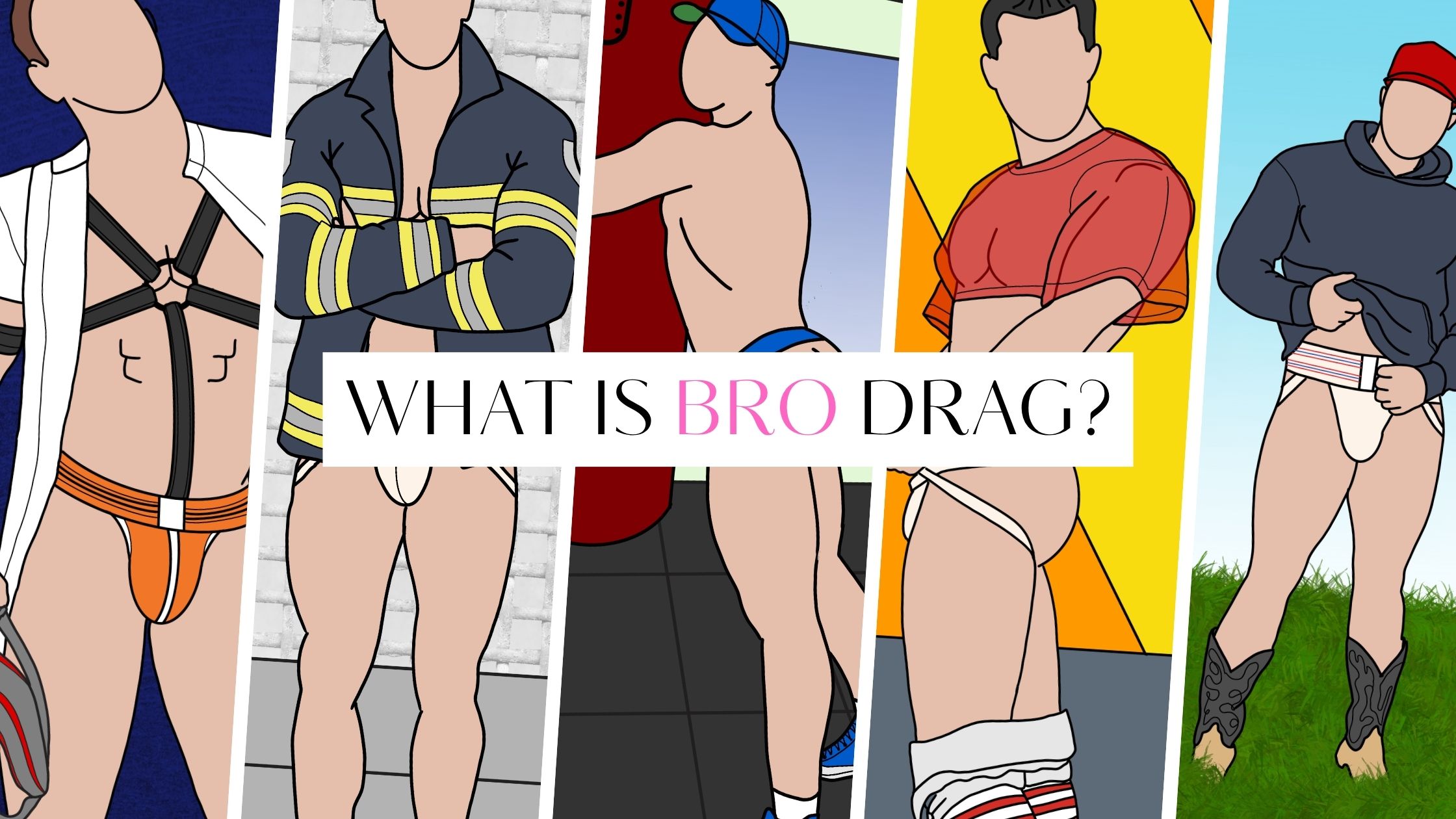
Lately, I’ve been obsessed with a concept I can’t stop thinking about — Bro Drag.
It’s not traditional drag. It’s not wigs and gowns and lip-sync battles. Bro Drag is something different. It’s hyper-masculinity turned into performance. Think backwards caps, gold chains, jerseys, compression shorts, competition speedos, fake swagger, and exaggerated frat energy. It’s masculinity dialed all the way up.
But here’s the twist — it’s intentional.
Bro Drag plays with straight bro culture in a way that feels ironic, erotic, and sometimes camp. It’s the performance of the “jock,” the “frat guy,” the “straight-acting” fantasy — but in queer spaces, by queer men.
While the term “Bro Drag” appears to be relatively recent (gaining visibility in the 2010s through social media, circuit culture, and themed party branding), the roots go much deeper.
The Historical Roots
In the 1970s, gay “clone culture” in places like the San Francisco Castro district and New York City featured hyper-masculine styling — mustaches, boots, tight jeans, leather. It was a political and erotic shift away from stereotypes of effeminacy.
In the 1990s and early 2000s, brands like Abercrombie & Fitch helped mainstream the frat-boy fantasy — which gay men simultaneously consumed, reinterpreted, and eroticized.
Fast forward to today, and Bro Drag exists in:
- Circuit parties
- Instagram underwear culture
- “Masc” branding
- Jockstrap revivals
- Themed events like Frat Night
It’s masculinity as costume. It’s drag without dresses. And it raises real questions:
- Is this parody?
- Is this desire?
- Is it reclaiming masculinity — or reinforcing narrow standards?
For a community that has long negotiated what masculinity means, Bro Drag feels like the latest evolution of that conversation.
And honestly? It connects directly to underwear culture, jock aesthetics, and the performance of confidence.
This isn’t just a look. It’s a statement. If you are a Patreon member, you can hear my podcast on this subject under the first Tim’s Take very soon.

1 Comment
If there’s any group of people known for throwing appearance into the wind, it would be the LGBTQ+ community. From balls to fashion shows to every weekend at a gay bar, we’ve invented every appearance from bro to hoe. It’s a state of confusion to anyone not involved in the community.