


I’ve been saying this for years, and I’m going to say it again — we need our own social network. Not another Instagram account waiting to be flagged. Not another TikTok video shadowbanned. Not another friend waking up to find his entire account erased because an algorithm decided his swim brief crossed an invisible line. If you’ve been part of this community for any length of time, you’ve seen the pattern. You invest time. You build connections. You grow an audience. And then suddenly, without warning, it can all disappear.
This isn’t about one post or one account. It’s about long-term instability. It’s about realizing that the platforms we depend on don’t actually understand our culture — and increasingly don’t seem interested in protecting it.
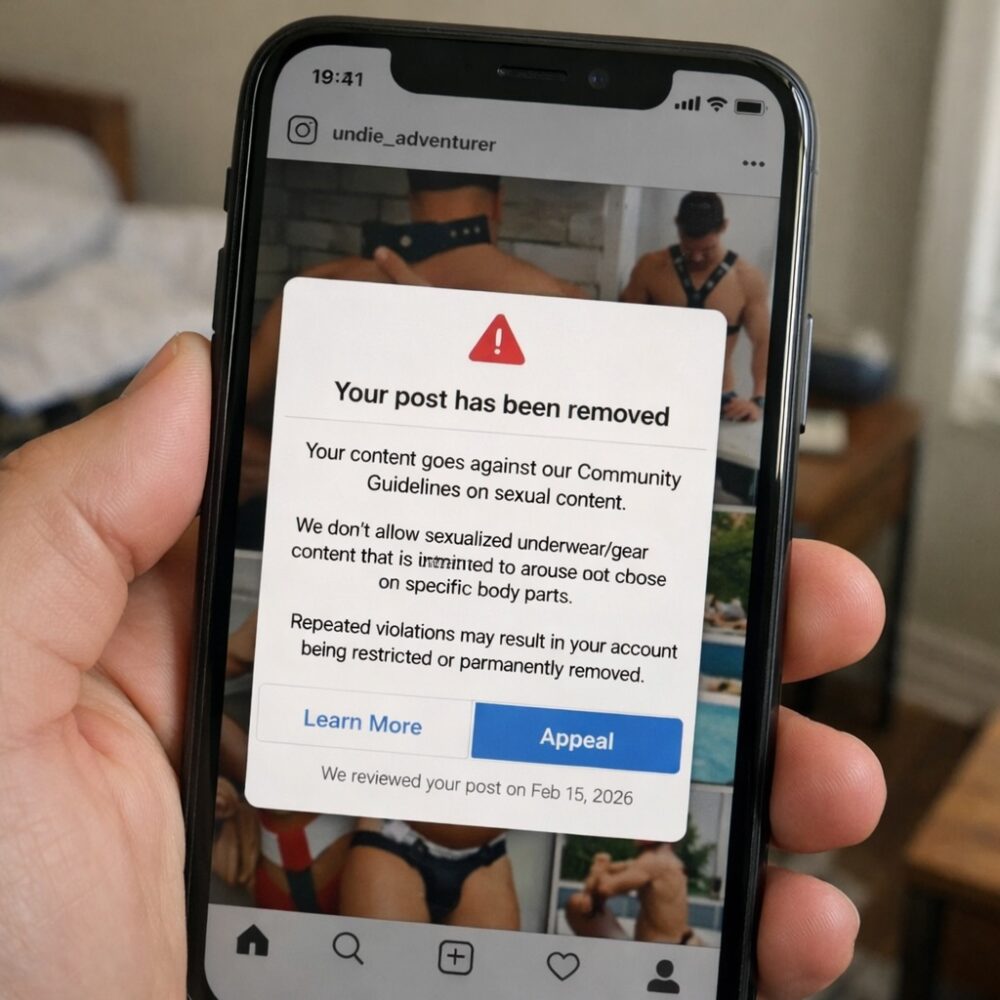
The Reality We’re Facing on Instagram
Instagram has become unpredictable at best and quietly hostile at worst when it comes to men’s underwear and swimwear content. Posts are removed under broad “Community Guidelines” that are open to interpretation. Appeals often feel like they vanish into the void. Enforcement is inconsistent — one person’s beach photo remains untouched while another’s nearly identical image is flagged or removed. There is no transparency in how these decisions are made, and no meaningful explanation when they are enforced.
The double standard is impossible to ignore. Women in bikinis are positioned as aspirational, lifestyle, fitness, or fashion content. Men in swim briefs are treated as inherently provocative. The garment is similar. The setting is similar. The intent is often identical. But masculinity is judged differently. And when masculinity falls outside a narrow cultural comfort zone, the content becomes suspect.
Over time, that wears on a community. It creates hesitation. It creates fear of posting. It forces self-censorship. And it makes it clear that we are tolerated — not embraced.
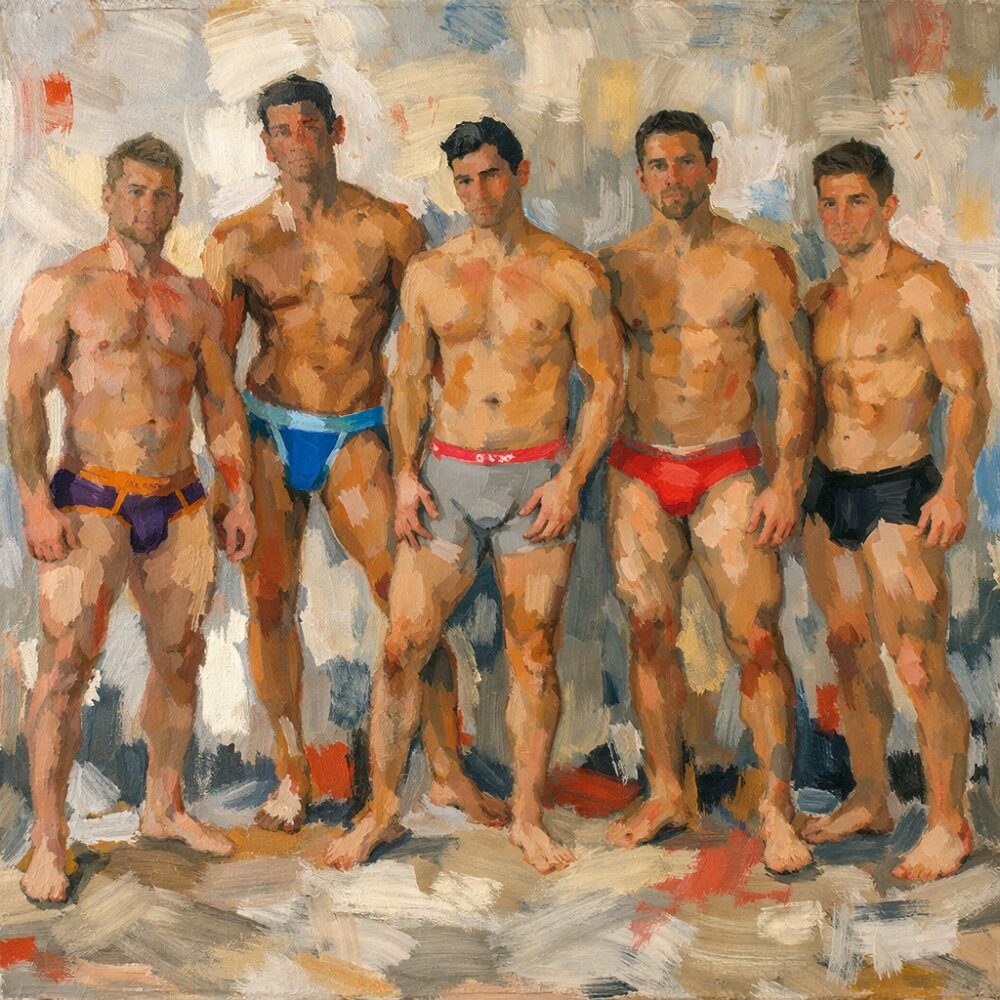
TikTok and the Policing of Male Expression
If Instagram feels inconsistent, TikTok feels even stricter. The platform’s moderation approach toward male bodies in minimal clothing leaves very little room for nuance. Content that is clearly fashion-driven, fitness-oriented, artistic, or simply beach lifestyle gets flagged simply because a man is wearing a brief, thong, or tight spandex.
It doesn’t matter that the content is:
- Editorial
- Athletic
- Body-positive
- Creative
- Completely non-sexual
The clothing alone becomes the issue. And that tells you something deeper is at play.
There is still an underlying cultural discomfort with men who embrace swim briefs, bikinis, jockstraps, spandex, crop tops, or anything outside the “approved” masculine uniform. There is an unspoken narrative that real men don’t wear those things. So when we do, our expression is treated as inherently sexual or inappropriate. That bias is subtle, but it is real. And it shows up in enforcement patterns across platforms.
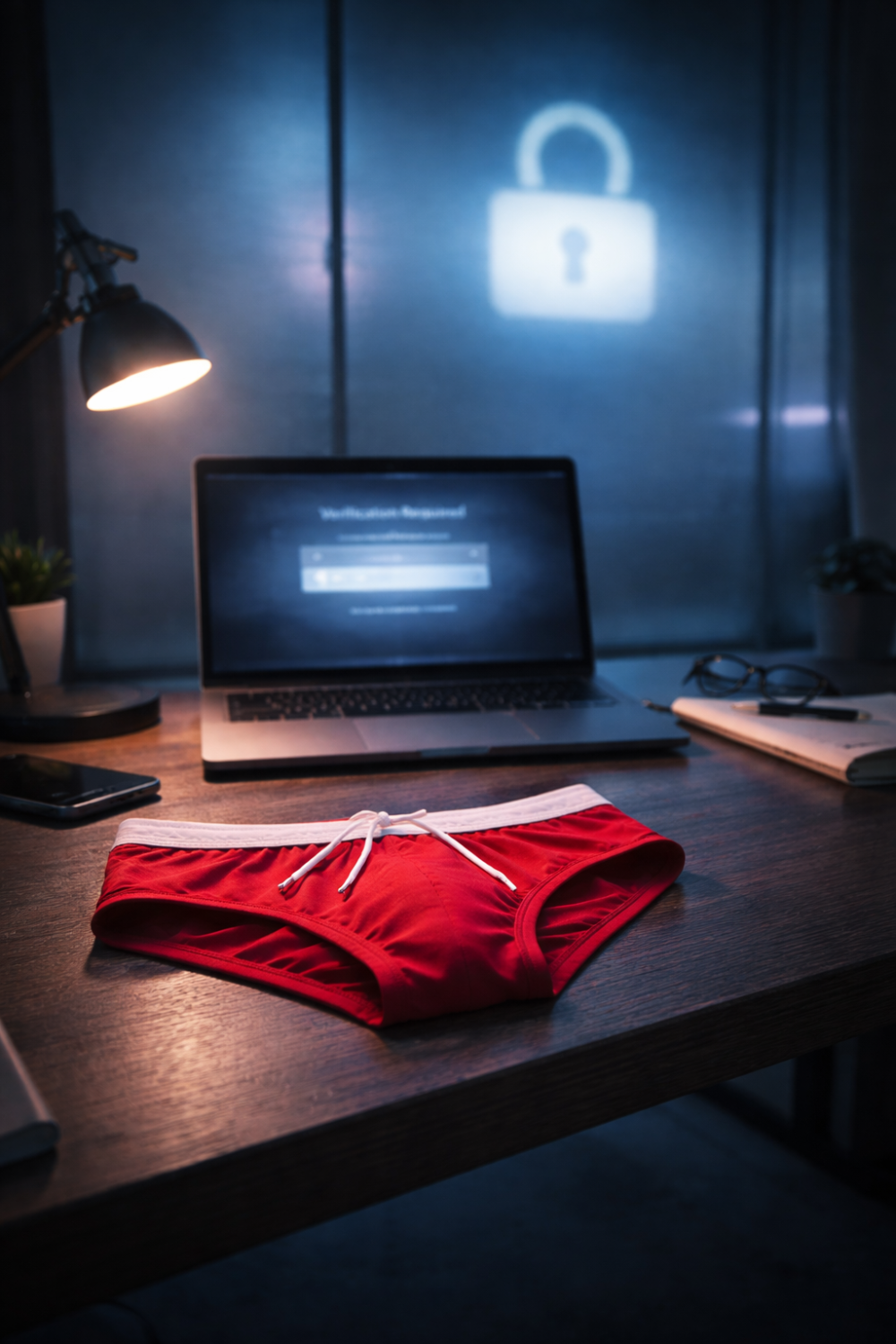
Discord and the Illusion of Stability
For a while, many of us saw Discord as a solution — a space with more control and less algorithmic interference. But even there, changes around age verification and adult content classification have introduced new layers of friction. Stricter compliance measures, identity verification requirements in some regions, and increased scrutiny of servers labeled adult or NSFW mean that we are still operating within someone else’s framework.
Discord isn’t designed specifically for underwear culture. It serves a broad ecosystem of communities. If its policies shift again, we remain vulnerable. Once again, we are building on infrastructure we do not control, governed by standards that can change without our input.

We’re Building on Rented Land
The larger issue is that the entire social ecosystem feels unstable. Algorithms change overnight. Enforcement standards shift quietly. Platforms prioritize advertiser comfort over niche communities. Accounts disappear with little recourse. Years of work can vanish with a single automated decision.
We are building our homes on rented land. And the landlord keeps changing the rules.
Every time someone loses an account, we rally. We get frustrated. We talk about unfairness. And then we go right back to rebuilding in the same system that removed us. At some point, we have to question whether that cycle makes sense.
This Won’t Happen by Complaining
Here’s the hard truth. Frustration alone will not create stability. Anger at platforms will not build independence. Sharing screenshots of deleted posts won’t protect the next account.
If we want something different, we have to build something different.
That means stepping beyond conversation and into action. It means understanding that community isn’t just about consuming content — it’s about ownership and responsibility. It means realizing that independence requires participation.
For this to happen, we need:
- Guys who commit to joining a new platform
- Volunteers willing to help moderate
- Developers who can help build and maintain infrastructure
- Financial backing from the community
- Long-term dedication, not short-term excitement
If we continue to rely entirely on outside platforms, we are accepting their rules as permanent. Complaining about those rules without building an alternative keeps us exactly where we are.

What Building Our Own Network Really Means
When I talk about creating our own social network, I’m not talking about chaos or an anything-goes environment. I’m talking about a focused, community-driven platform designed by people who understand underwear culture — the nuance, the context, the difference between expression and exploitation.
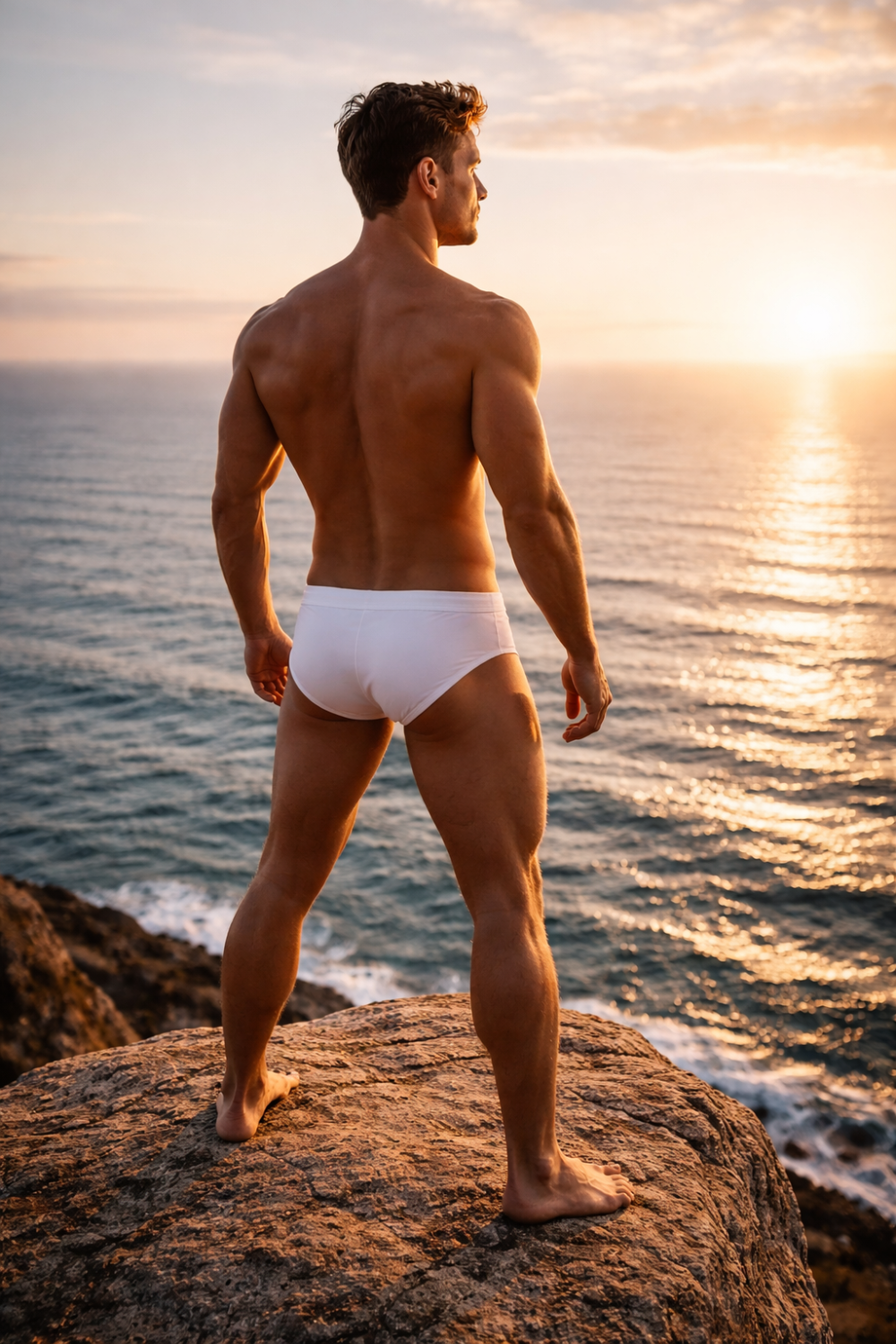
Imagine a space with clear, common-sense standards and transparent moderation. A place where posting a white brief doesn’t automatically trigger suspicion. A place where swim briefs, jocks, spandex, vintage gear, art, and brand content each have dedicated spaces. A platform where context matters and expression isn’t automatically sexualized.
Building that kind of space would require:
- Clear and transparent community guidelines
- Moderation by people who understand the culture
- Structured categories for different interests
- Sustainable hosting and technical infrastructure
- Financial support to keep it independent
This isn’t about replacing Instagram overnight. It’s about creating stability. It’s about having a home base that doesn’t disappear when an algorithm changes. It’s about building something that protects the culture instead of constantly negotiating for permission to exist within it.
Underwear Culture Deserves Stability
Underwear culture has always been about more than fabric. It’s about confidence. It’s about body positivity. It’s about masculinity on our own terms. It’s about art, history, connection, and community. For many of us, it was the first place we felt seen and understood.
That deserves stability. It deserves a home that doesn’t vanish with a policy update.
I’ve been talking about this for years because I believe in this community. I believe we deserve clarity instead of ambiguity. I believe we deserve consistency instead of fear. And I believe we deserve a platform that understands us instead of tolerating us.
If we truly see this as a community — and I do — then it’s time to stop waiting for permission.
Not after the next account disappears.
Not after the next algorithm shift.
Now.
Because we shouldn’t have to beg for space.
We should own it.
